Reimagining collaboration for remote teams
Talktrack is an immersive recording feature that lets people leave video and audio feedback directly on Miro boards. Instead of watching a video of the work, the viewer stays on the live board—with the recording guiding them through it. The result preserves context, respects individual focus, and makes asynchronous collaboration feel more like working together.
Disconnection, disruption, and redundant meetings
Remote teams book calls to explain things that do not need a call. Text comments lose tone, context, and the reason something matters. A few replies later nobody is sure what is being asked, so somebody schedules thirty minutes to sort it out and six people lose an hour.
Screen recording looked like the obvious fix. Record the explanation once, send it, and let people watch whenever. But a recording of a Miro board still interrupts the viewer: they leave their work, watch a video of somebody else's screen, then return and reconnect it to the actual board.
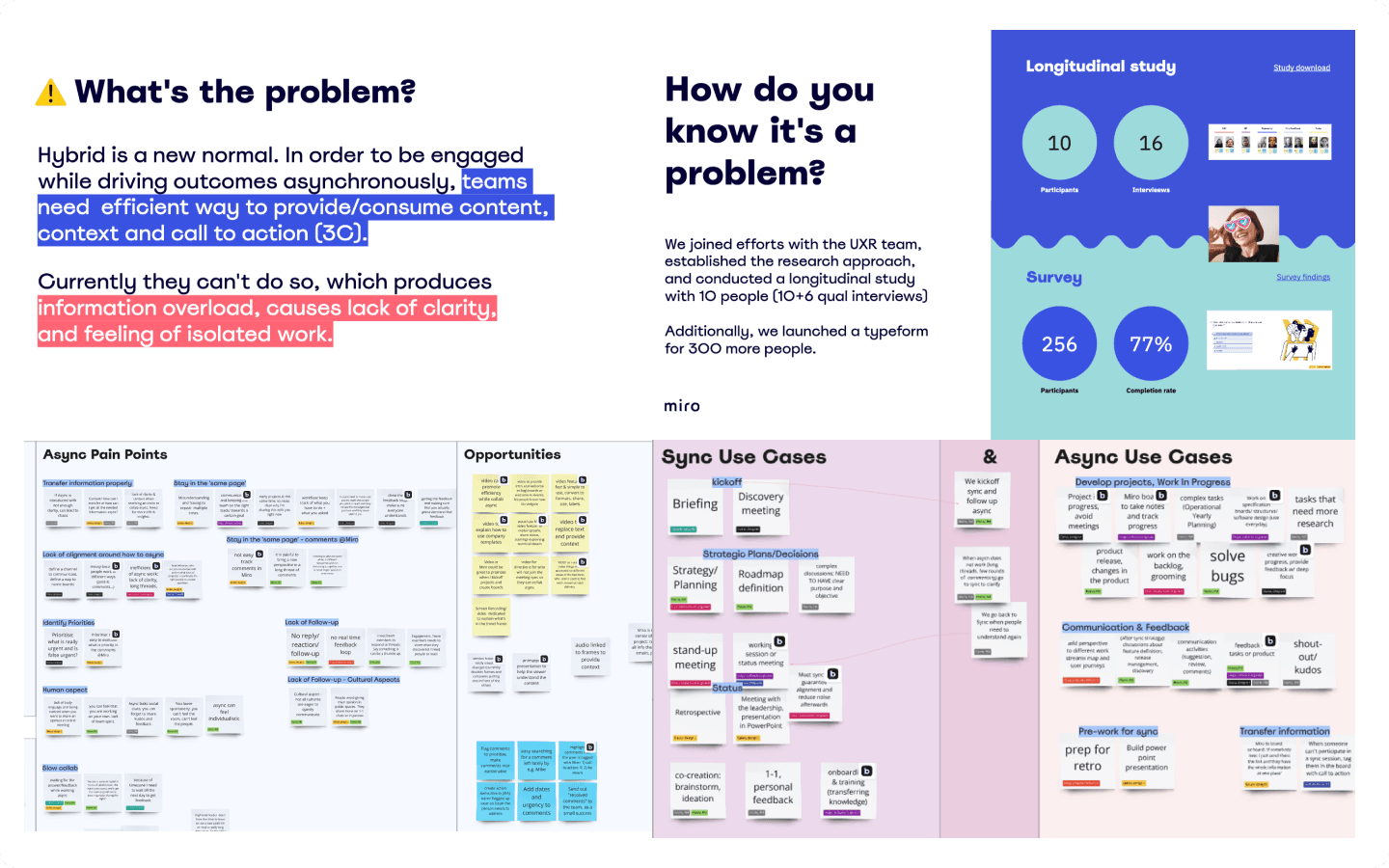
The starting point: push back to move forward
Leadership had already decided: build the Loom integration. We did not think it solved the real problem, so instead of starting with implementation we ran longitudinal studies and surveys to find out where asynchronous work actually breaks.
Three patterns came back consistently: constant context switching, having to stop your own work to receive somebody else's, and the missing emotional register that makes feedback legible. None of those are solved by a better recording. They are solved by not making the viewer leave.
We built both approaches—a conventional screen recording and our on-board version—and tested them against each other. Preference for the on-board concept was decisive. Evidence, not opinion, moved leadership and moved our team from platform into Miro's core product organisation.
Crafting the vision: death to pixels and Mario Kart
We ran ideation sessions around a harder version of the problem: how do you give somebody full context without taking over their screen, let them engage at their own pace, and still make it feel like a person is there?
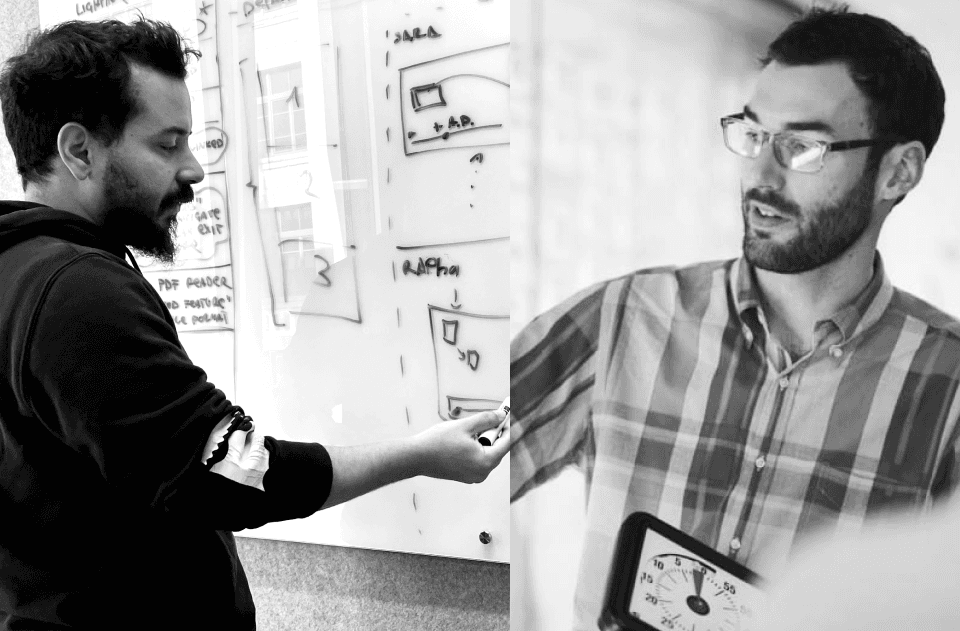
Then we ran a GV design sprint with Jake Knapp to pressure-test the idea. A developer on the team compared it to Mario Kart's ghost—the translucent trace of a previous run that you race alongside. You can see exactly what they did, but you are still driving.
That crystallised the concept: do not record the pixels; record the path. Keep the viewer on the board where the work is, and let the board play itself back around them.
Talktrack interactive recordings: when async feels like sync
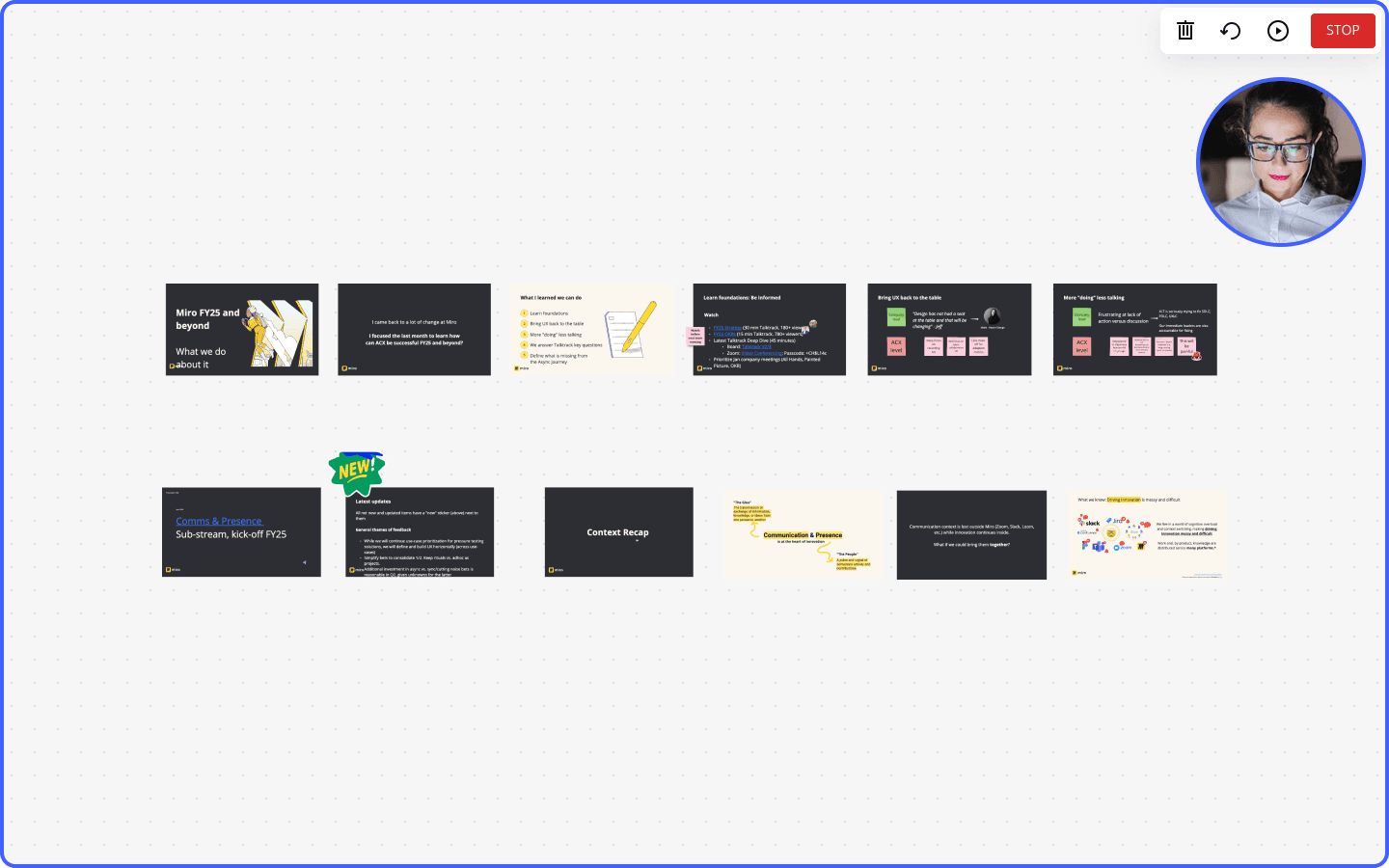
Talktrack records voice and face while everything else remains live Miro content. During playback, people can pause, inspect the board, move around, and continue where they left off. The recording adds a human guide without turning the work into a flat video.
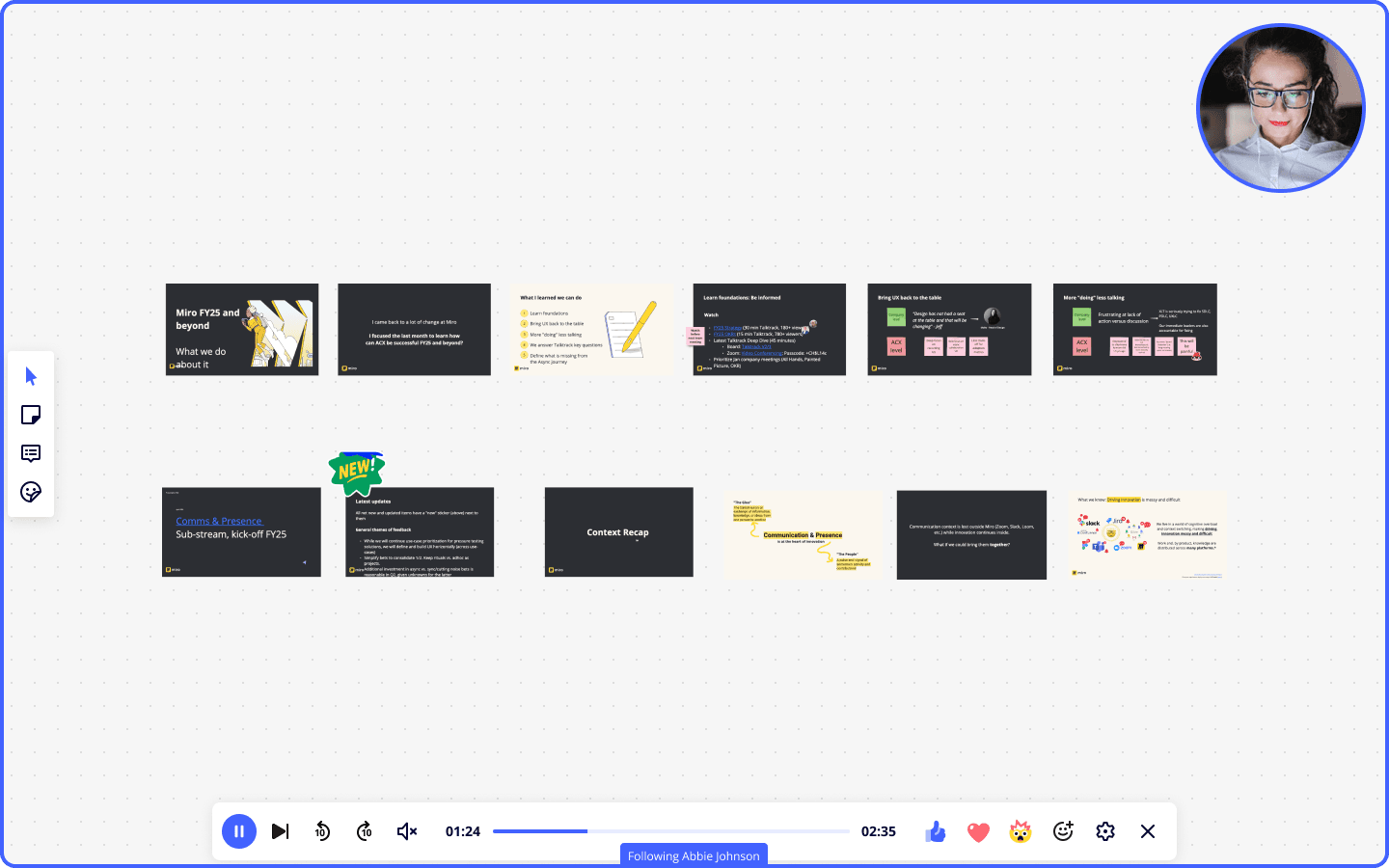
The first private beta with Idealo exposed that the recording interface was doing too much. Recording felt like operating a tool instead of talking to someone. We cut, then cut again. The biggest quality jump came from removing controls until the experience got out of the way of the message.
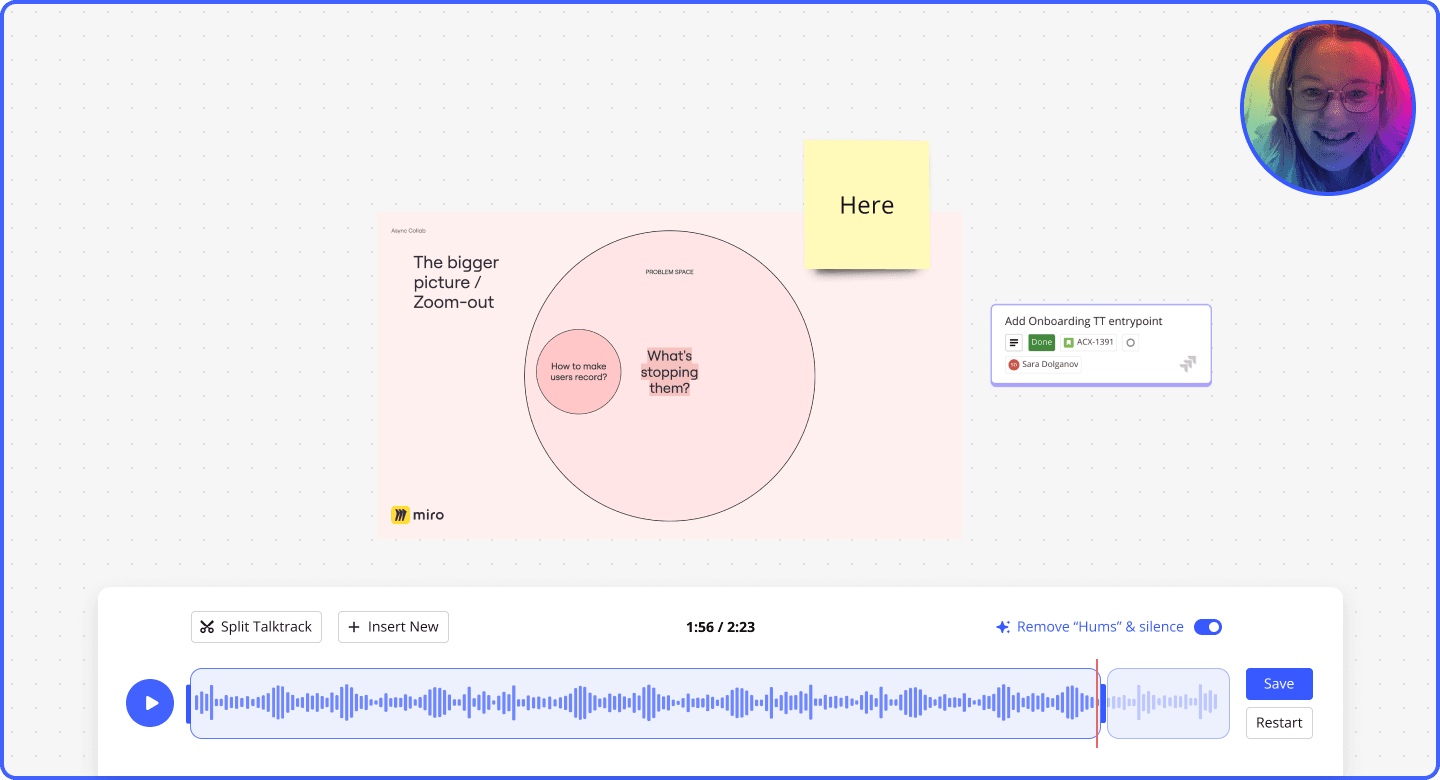
My main responsibility through this phase was consistency of look and feel across platforms—especially the playback controls, the surface people touched most and the one with the least precedent to borrow from.
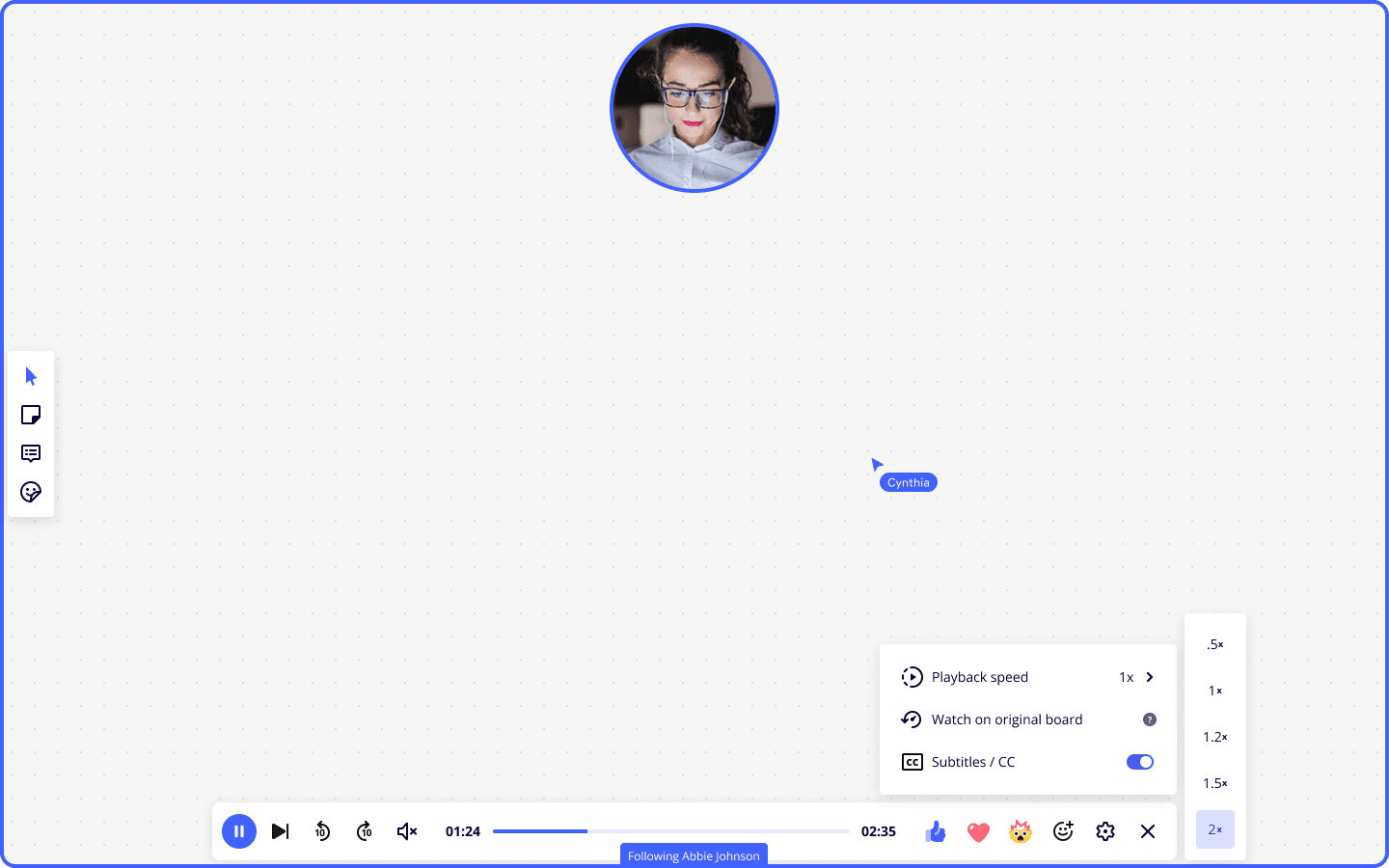
“Before, we had to build boards and have fake meetings just to record instructions. With Talktrack, we could do it directly in Miro.”
Global FinTech customer
Virality: expanding Talktrack's reach
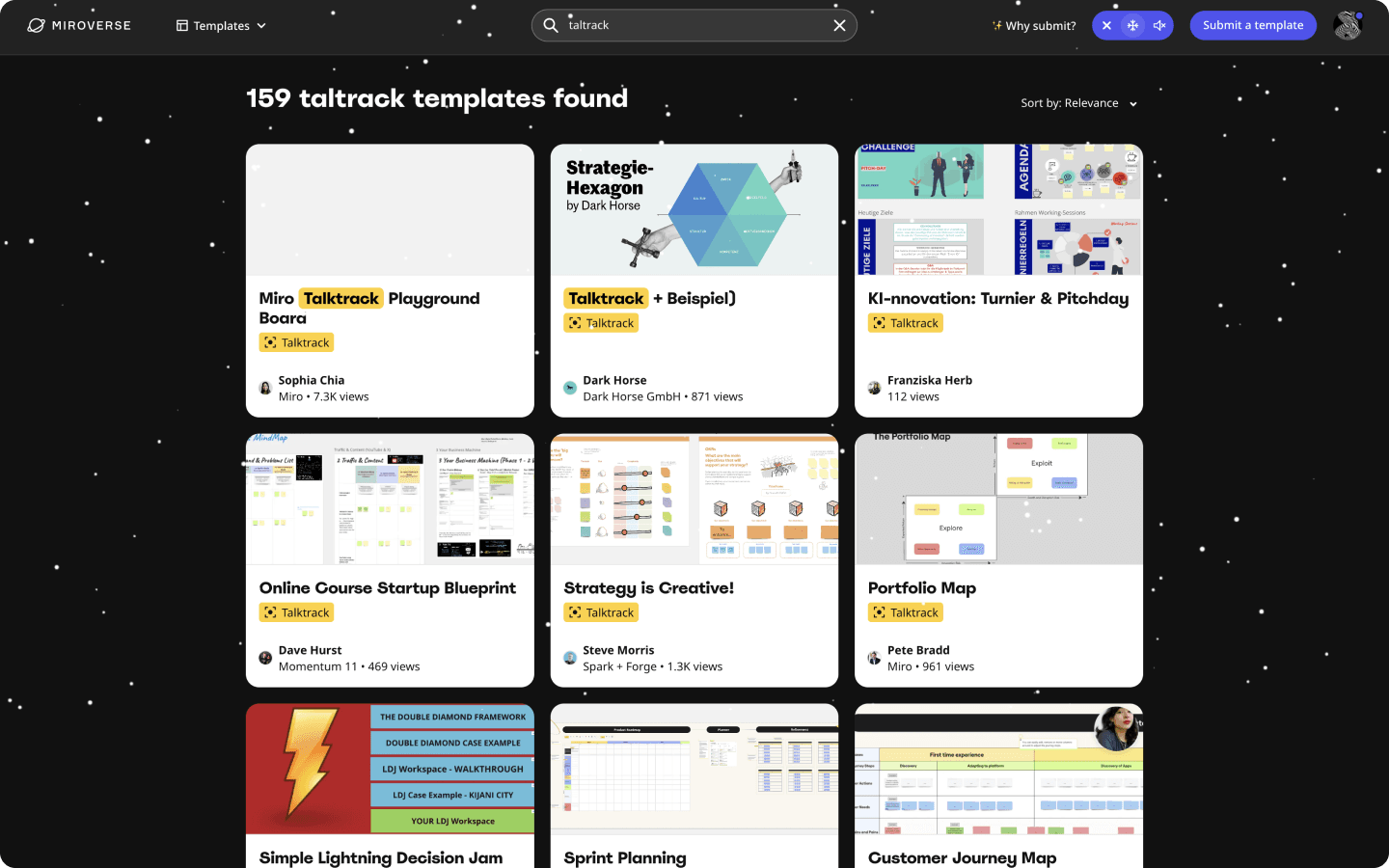
A feature nobody discovers does not count. We launched Talktrack into Miroverse and enabled embedding in Coda, Monday.com, and Atlassian so recordings could travel into the tools teams already had open.
Results
- 4.4/5
- Customer satisfaction
- Patent
- Pending
Talktrack achieved the highest customer-satisfaction score of any feature at Miro, against a company average of 3.3. The work is also associated with a pending patent.
Talktrack 0–1: looking back, looking forward
Push back when you have evidence, not when you have an opinion. We were asked to build one thing and built something else. That worked because we returned with a comparison test, not a manifesto.
Context is the thing text loses. Tone, urgency, and intent are most of the message. Async tools that only move words around solve the easy half.
Protecting flow beats delivering information. The version that respected the viewer's attention beat the version that delivered the message more efficiently.
We tested the concept early and the interaction late. Cutting the recording UI to almost nothing was the biggest single improvement, and it came from beta feedback near the end. That should have been tested first.